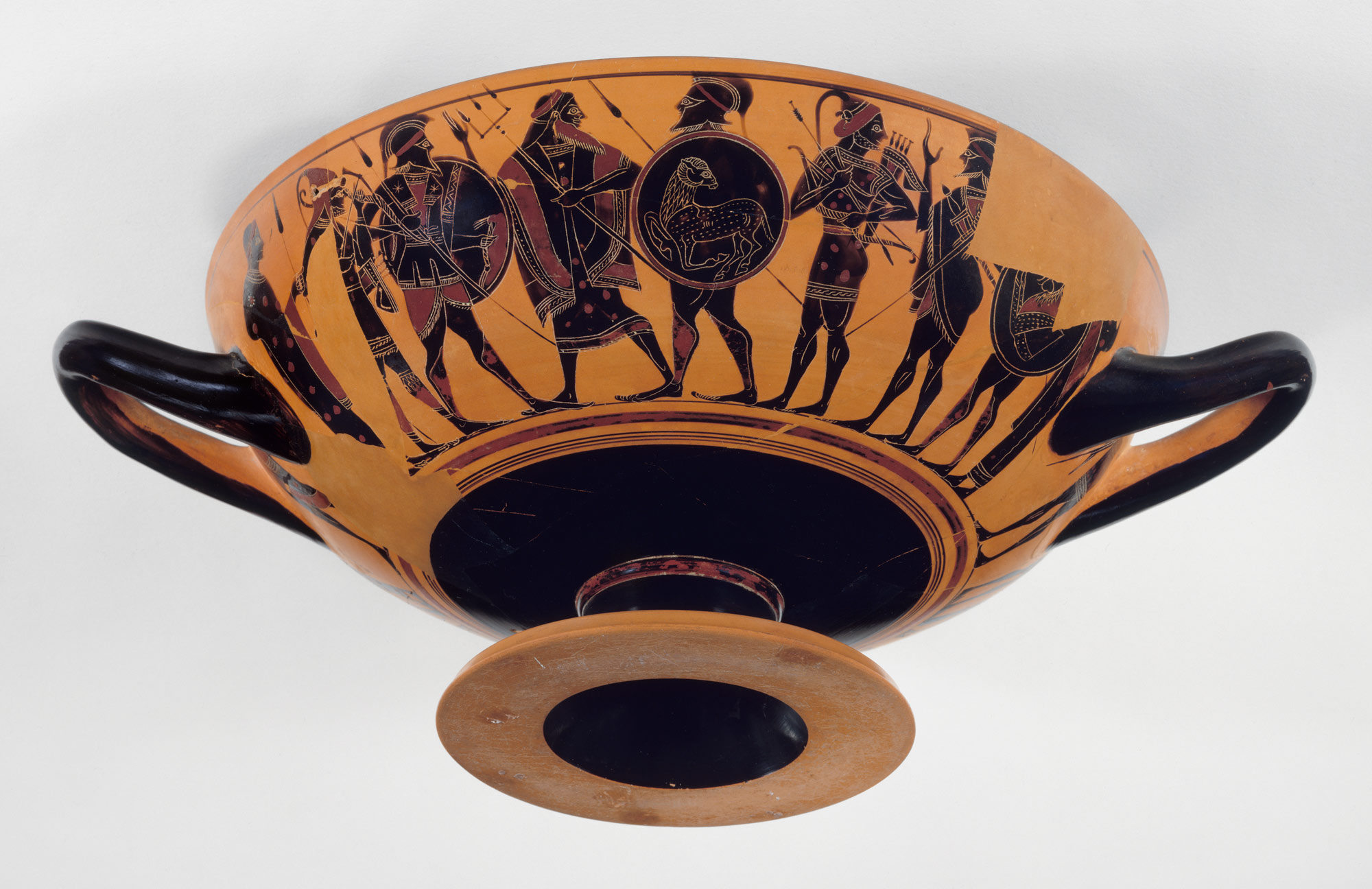
Visit to the Metropolitan Museum
The visit to the museum was more exciting than what I personally expected. In my case I have never been attracted to visiting museums, and for this project I even thought I was going to have a boring time looking at objects from the far past. But, surprisingly it was a very enriching experience for me. As soon as I entered the Greek gallery I literally felt that I travelled in time. Just by being surrounded by objects that were actually used centuries ago made me feel that I was actually there and gave me a much better sense of the history behind them.

The first object that caught my attention and actually I never thought I would have the chance to be in front of was a Greek warrior's body armor. The first thought in my mind was the name of Greek war heroes such as Achilles, Ajax, Odysseus, etc. I took a closer look to the armor and I found small details engraved in the chest armor and helmet that would be the envy of modern art. My question immediately was "How did they make it back in that time"?

The next interesting piece of art I saw not only for its perfection but also for its significance behind in the Greek culture of the time was the sculpture of a real size lion. The figure had its body in a "ready to attack" posture. I always saw the same body language in all lions that I saw. Then I asked myself the meaning of it. I found out that the lion was used as the symbol of battle strength, tenacity, and also it was used as a "tomb guardian" figure.

I never saw a genuine representation of God Zeus, but it looked very close to how I imagined. I saw an sculpture of his face, and to me he looked concerned, not as old rather young to be the maximum authority of the Greek gods.

I literally travel in time when I encountered a monumental Greek palace column right in the middle of the room where all entrances led all visitors to, as if we the visitors were entering through the gates of Greece. When I stood in front of it my imagination instantly transported me to a Greek island making me feel that I was in the middle of it having the sea as background.

The next article that got my attention was a very small but significant engraving in stone representing one of the critical moments in the progressive revelation of Odysseus. It was the equivalent of a picture in modern times. It was an engraving of Odysseus who's feet were being washed by a nurse, in front of his wife and son. This part would be more involved with the Odyssey really but I thought it was worth mentioning anyways.
I also saw a group of very interesting sculptures, such as the Trojan Horse, the god Eros, and the image of the messenger of the gods Hermes. Even though we didn't talk about these figures in detail in class, I did remembered that they were mentioned briefly in some lectures and passages while we read the story.